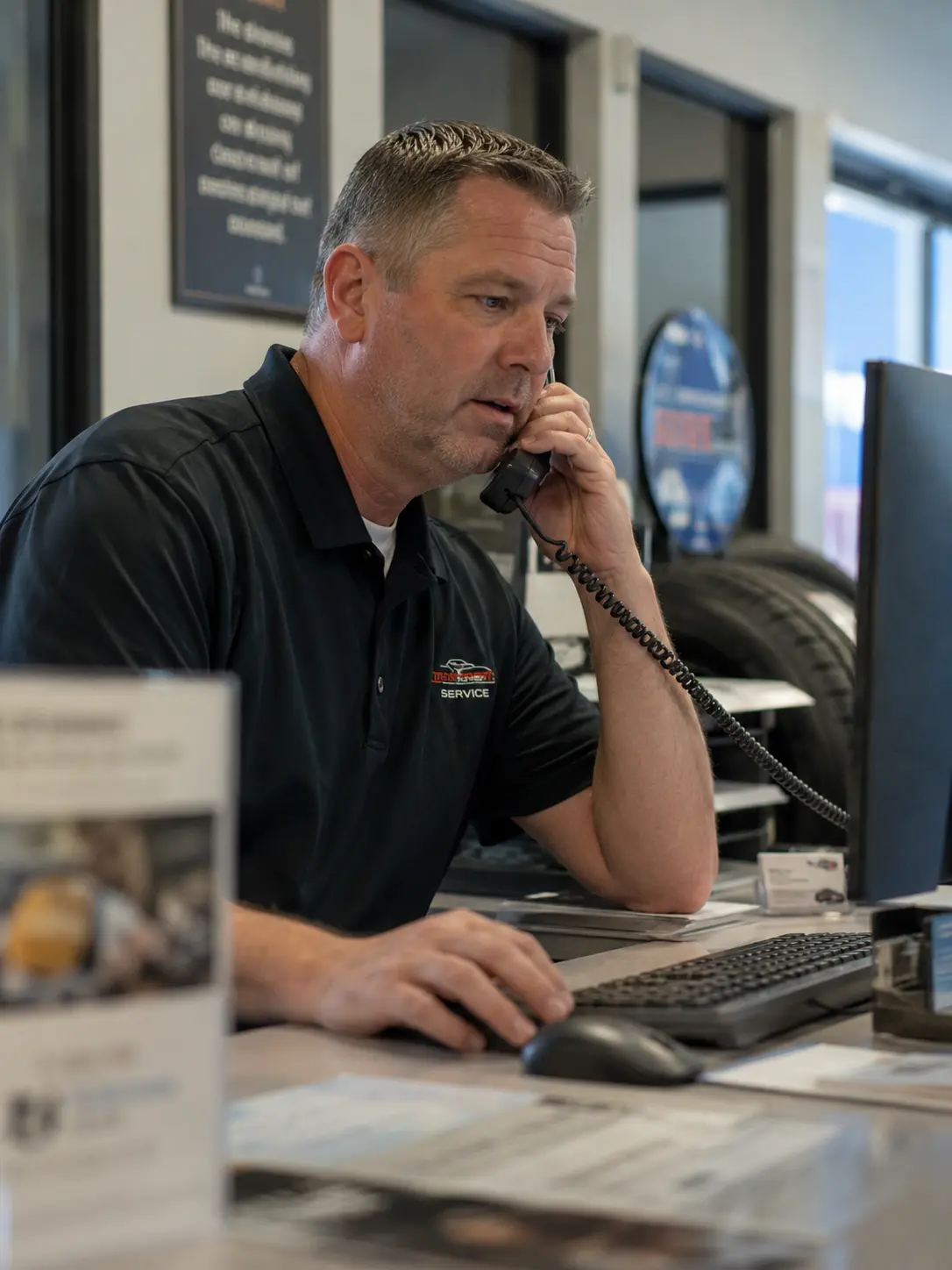
A recall call is not a routine service call, and treating it like one is where most stores lose time they did not need to lose.
The caller usually opens with some version of "I got a letter" or "I got a text about a recall." What they want next is simple: confirm the VIN, confirm the vehicle actually has an open campaign, and get a date on the calendar. What often happens instead is the call lands on whichever line is open, someone without the VIN in front of them tries to look it up mid-conversation, and the advisor on the drive gets pulled off a customer standing in the lane to answer a question that has nothing to do with the person physically in front of them.
Why this call type is different from "can I get an oil change"
Most inbound service calls are low-stakes scheduling. A recall call carries more weight for three reasons.
First, the caller is often anxious. NHTSA-mandated and voluntary safety campaigns covered more than 28 million vehicles in 2025 across 447 mandated and 223 voluntary actions (NHTSA 2025 Annual Recall Report). A meaningful share of those callers are phoning because a letter used words like "safety risk" or "stop driving," not because they are due for maintenance.
Second, eligibility is not obvious from the VIN alone. A recall notice tells an owner their vehicle is included in a campaign population. It does not tell them whether the remedy has already been performed by a previous owner, whether parts are on backorder, or whether their specific VIN was later excluded. Someone has to check.
Third, completion rates matter to the dealership, not just the driver. NHTSA's tracking shows recall completion typically settles between 75 and 87 percent over a vehicle's life, meaning a large population of vehicles on the road right now have an open, unfixed campaign attached to them (NHTSA Recall Completion Rates Report). Every one of those calls that gets mishandled, dropped, or answered with "we'll have to call you back" is both a safety gap and a service department that is leaving its own campaign-reimbursement work on the table.
The real cost is the interruption, not the call itself
A recall call rarely takes longer than a normal booking once someone has the right information in front of them. The damage happens because of when and how it interrupts the drive.
An advisor mid-write-up with a customer in the lane is not in a good position to also be typing a VIN into a lookup tool, cross-referencing an open campaign list, and explaining parts availability to a second person on the phone. The American Psychological Association's research on task switching is direct about the cost: moving rapidly between different mental tasks measurably slows people down and increases error rates, especially when the tasks require different rules or context (APA). For an advisor, that cost lands on both people at once. The phone caller gets rushed or put on hold. The customer standing at the counter gets a distracted advisor mid-explanation.
Multiply that by a Saturday morning, when recall calls, status checks, and walk-ins all peak at the same time, and the advisor becomes a bottleneck for a call type that did not need a human at all until the eligibility question came up.
What the call actually needs before an advisor gets involved
Handled correctly, a recall call has three steps, and only the last one requires judgment.
- Capture the VIN and confirm it against the vehicle the caller is describing.
- Check the VIN against the open campaign list to flag eligibility, rather than assuming every caller with a letter is automatically due for the same remedy.
- Route the result: if eligible and parts are available, book the appointment directly. If eligibility is unclear or parts are on backorder, route to the advisor or campaign coordinator with the VIN and context already attached, instead of a blank slate.
Uobo-Connect's service call handling does exactly this at the intake point. Recall and OEM campaign calls get the caller's VIN captured, eligibility flagged against the open campaign, and the appointment booked directly into the scheduler the store already uses. When a call needs a human, it reaches the advisor with the vehicle, VIN, and campaign status already attached, not as a cold transfer.
What this changes on the drive
The advisor still owns every judgment call: parts substitutions, goodwill decisions, diagnosis beyond the recall scope, and any conversation where the customer needs reassurance rather than information. What changes is that those conversations start with data already gathered instead of an advisor building context from scratch while someone waits in the lane.
That is the actual argument for automating this call type. It is not that recall calls are unimportant. It is that the VIN lookup and eligibility check are mechanical steps that do not need to happen in front of a customer who is already standing at the counter.
What to check before assuming this is handled at your store
A few questions worth asking about how recall calls move through your own service department right now:
- Does the person answering the phone have access to your open campaign list, or are they relying on the caller's letter as the only source of truth?
- How many recall calls get put on hold or called back because the advisor is busy on the drive?
- When a recall call is booked, does the appointment note include the VIN and eligibility status, or does the advisor have to re-verify it the day of the appointment?
If the honest answer to any of those is "it depends who's covering the desk," that inconsistency is the actual leak, not the call volume itself.